
Wine terminology exists for a reason. It allows winemakers, sommeliers, and enthusiasts to describe what is happening in the glass with precision. But for most people, especially those just getting into wine, that language often creates more confusion than clarity.
That’s where a well-structured wine tasting glossary becomes useful.
Instead of treating wine as something you either understand or don’t, this guide breaks it down into practical terms you will actually encounter – whether you’re reading a label, sitting in a tasting, or comparing different styles of wine. Alongside the terminology, we’ll include actionable wine tasting tips that help you apply what you’re learning in real situations, not just memorize definitions.
First, we cover the core wine terminology used across the industry. Then we expand into tools, techniques, and wine tasting logic. Finally, we narrow the focus to Hvar wine tasting, where local grape varieties, climate, and tradition shape your experience.
The goal is not to turn you into a wine expert overnight. It’s to give you enough clarity that the next time you sit down for a glass of wine – especially on Hvar – you know exactly what you’re experiencing and why it tastes the way it does. So the next time you hear that wine is dry you don’t scratch your head thinking – “How can a liquid be dry? Aren’t liquids wet by definition?”
How Wine Tasting on Hvar Actually Works
Before jumping into a wine tasting glossary, it’s important to understand that wine tasting is all about observation. Every tasting follows the same basic sequence: you look at the wine, you smell it, you taste it, and then you evaluate it.
One of the most important wine tasting tips is to slow that process down.
Most people rush straight to drinking. Instead, take a moment to observe the color, then smell the wine before tasting it. That single change already puts you ahead of most beginners. Even if you don’t understand anything, just looking at the wine and smelling it makes you look like you’re there to actually learn about wine, not just chug. Checking out the color and smell of wine has a similar effect as wearing glasses at a job interview, makes you look smarter….
Another key point: you are not trying to guess “correct answers.” You are building your own reference system. The terms in this wine tasting glossary exist to help you describe what you already perceive, not to replace your perception.
Wine isn’t a teaching liquid, not when it comes to flavors and structure. Wine can teach you a lot about life, it can help you find love, but other than yourself, you can’t discover anything in wine. Wine is not a discovery liquid, not when it comes to flavors. It’s a reminder, a chest of hidden memories that you may not be able to access in any other way, but through smell…
And that’s why two people can smell the same wine and have different sensations.
To some the smell of prunes can be a reminder of their granny’s warm kitchen during the winter days. Someone may smell the same wine, recognize prune notes, and get taken back to the first date with their wife when they shared, what has since become their favourite, desert.
Wine, when it comes to notes and flavors, can’t teach you who you are, it can only remind you who you are and how you became that person.
Wine Tasting Glossary – Core Wine Structure Terms
Every wine is built on a few key structural elements. Understanding these is the foundation of any wine tasting glossary.
- Body – how heavy or light the wine feels in your mouth. Light-bodied wines feel closer to water, while full-bodied wines feel richer and denser (like drinking cream).
- Acidity – the freshness of the wine – high acidity makes your mouth water and gives wine a lively, sharp character
- Tannins – antioxidants found mainly in red wine that create a dry, slightly rough sensation on your gums and tongue, healthy for cardiovascular system
- Alcohol – contributes to the weight and warmth of the wine. Higher alcohol wines feel fuller and more intense
- Balance – how well acidity, tannins, alcohol, and body work together. A balanced wine feels harmonious
- Legs – The streaks or droplets that form and run down the inside of a glass after swirling wine, caused by alcohol evaporation and surface tension; often (but not reliably) associated with higher alcohol content rather than quality.
- Finish – how long the flavor remains after swallowing
Wine Tasting Glossary – Aroma and Flavor Terms
Describing what you smell and taste is where most beginners struggle, which is why this is one of the most important sections of any wine tasting glossary.
- Aroma – what you smell in the glass before tasting
- Flavor – what you perceive once the wine is in your mouth (a combination of taste and smell)
- Primary aromas – come from the grape itself (fruit, citrus, berries)
- Secondary aromas – come from winemaking (yeast, butter, bread)
- Tertiary aromas – develop with aging (vanilla, nuts, tobacco, coconut)
A useful wine tasting tip here is to simplify your thinking. Instead of trying to name exact fruits, start with categories like fresh fruit, dried fruit, or herbal. Precision comes later.
Or, don’t even try to look for specific notes, enjoy wine as a tool that binds you and your friends around the table. Wine tasting, or even wine drinking, doesn’t have to be about wine at all, it can be about people tasting it.
And that’s amazing because there’s no wrong way to drink wine (just don’t drink it from a red plastic cup, please). There’s your way to drink wine which makes it correct for you.
Wine Tasting Glossary – Texture and Style
Beyond structure and aroma, wine also has texture and style, which shape how it feels overall.
- Dry – no noticeable sweetness (in EU a wine can be called dry if it has less than 3,92 grams of ris)
- Sweet – contains residual sugar
- Crisp – high acidity, refreshing and sharp (usually fresh white wines and rosés)
- Smooth – low tannins, easy to drink (Pinot Noir is smoother than Cabernet Franc)
- Complex – multiple layers of aroma and flavor (fresh white wine is less complex than orange wine)
- Elegant – balanced, refined, not heavy (light bodied reds like Darnekuša and some Pinot Noir)
- Bold – intense, strong flavors and body (Cabernets, Syrah, Plavac Mali…)
Wine Tasting Glossary – Tools and Equipment
A proper wine tasting glossary must include the tools commonly used in the wine industry, because they directly affect how wine is experienced.
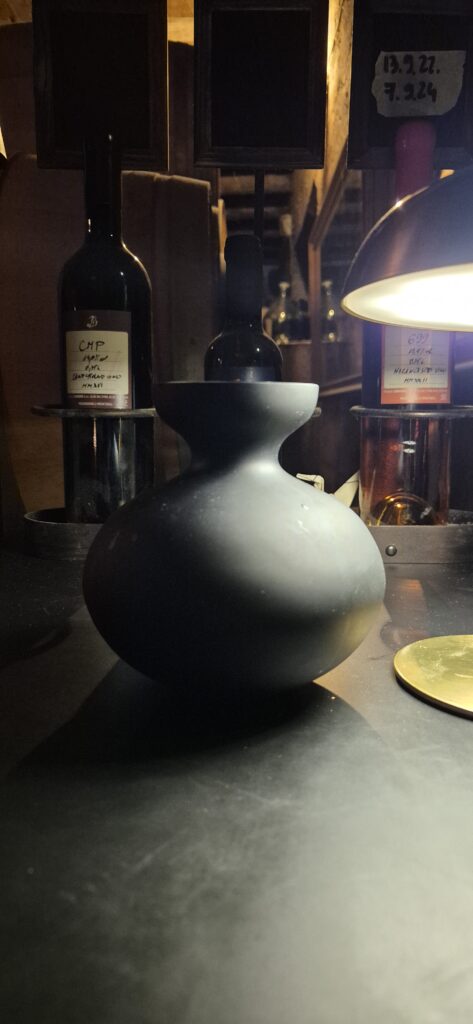
- Decanter – a vessel used to pour wine from the bottle while separating it from sediment, common misconception is that decanter is used primarily to air wine
- Aerator – a tool that introduces oxygen into wine quickly, opening up aromas
- Spit bucket (spittoon) – used to discard wine during tastings so you can taste multiple wines without overconsumption
Wine Tasting Glossary – “Advanced” Terms
If you want to feel and look smart during the wine tasting, read these, they will allow you to nod your head with understanding during the presentation.
- Terroir – the combination of soil, climate, and environment that shapes a wine
- Vintage – the year the grapes were harvested
- Varietal – the type of grape used
- Oak aging – storing wine in oak barrels, adding flavors like vanilla or spice
- Residual sugar – the amount of sugar left after fermentation
These are essential parts of any wine tasting glossary because they explain why wines differ from each other.
Wine Tasting Tips for Real Situations
Now that the terminology is clear, the focus shifts to application. Good wine tasting tips are always practical.
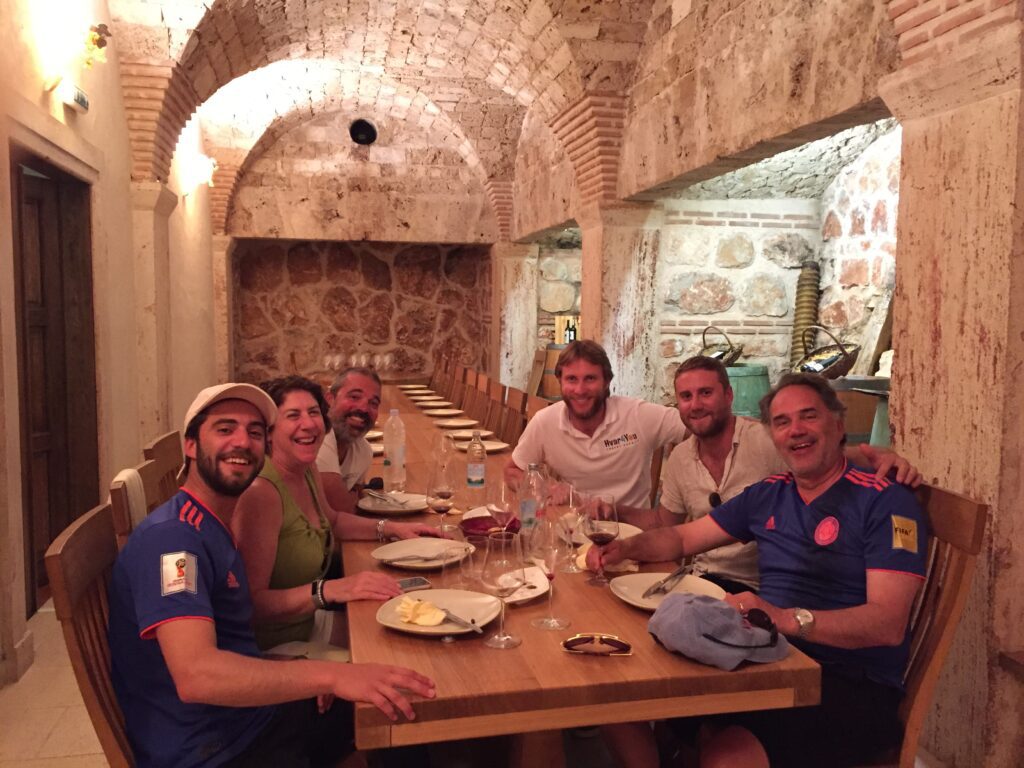
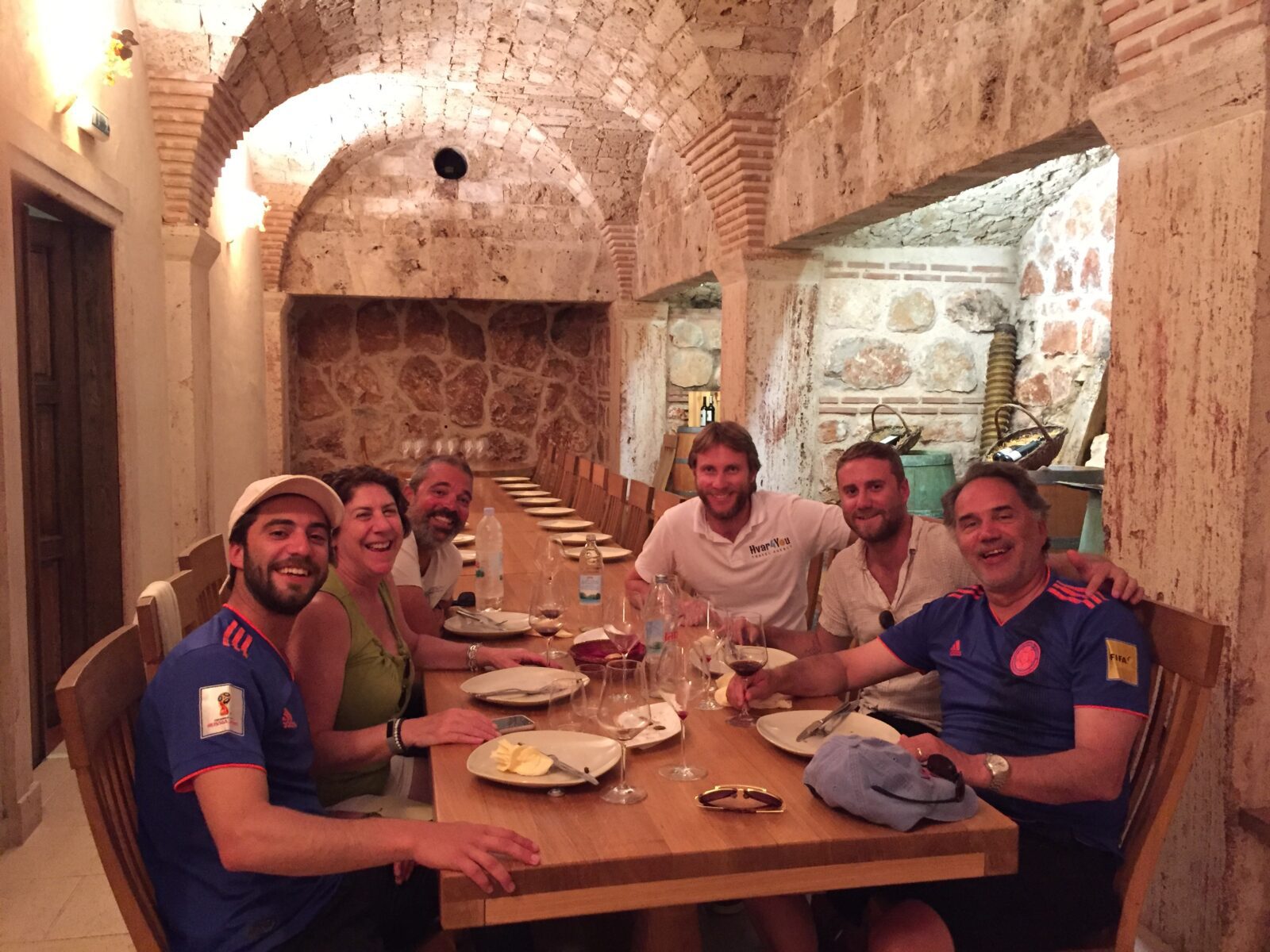
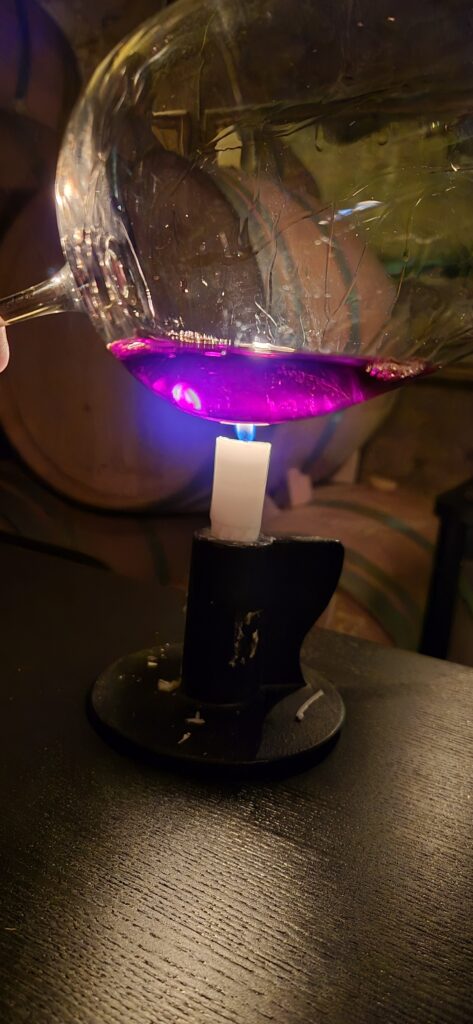
Start by tasting wines side by side whenever possible, that will deepen your understanding of both labels. And the host of our Hvar4You Wine and Olive Oil Tasting Tour knows that, so you’ll be comparing Hvar wine in the candlelit cellar. Pay attention to temperature, as serving wine too warm or too cold can distort its characteristics.
Use a spittoon when necessary. This is standard practice and allows you to stay focused.
Most importantly, revisit wines you liked. Your first impression is rarely your final one.
Hvar Wine Tasting – Local Terms You Should Know
Once you understand general wine terminology, Hvar wine tasting becomes much more meaningful.
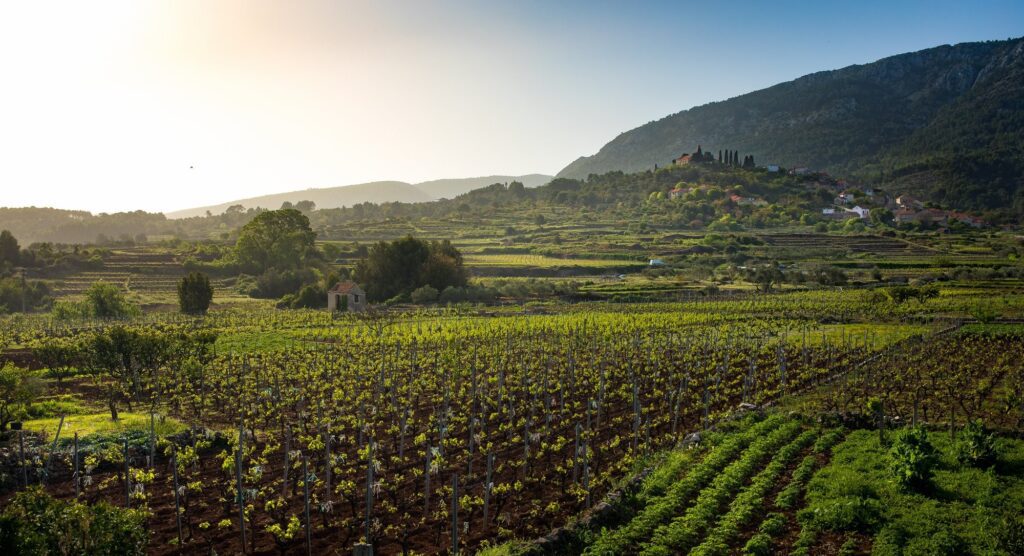
Hvar Island has one of the longest continuous winemaking traditions in Europe, shaped by its position in the Adriatic and its Mediterranean climate. More about it you can read in our History of Hvar Wine – How Timeless Treasure Traveled Through Time. You can also learn why olive oil is as important as breast milk in Dalmatia if you read our Hvar Olive Oil History – The Story of Eternal Motherly Love. Their younger cousin, lavender, got here a lot later, but made a big impact. You can learn its story in Hvar Lavender History – Beautiful, but Recent Addition to Hvar’s Landscape.
But now we’ll look at the grape varieties you can find on Hvar and terms you may hear while listening about Hvar wine.
- Plavac Mali – the most important red grape on Hvar and Croatia, producing strong, structured wines, related to Kaštelanski Crljenak (Zinfandel/Primitivo)
- Darnekuša – indigenous red, light, gentle, people compare it to Pinot Noir, but Darknekuša is even more delicate, very difficult to find
- Ružica – indigenous red grape from Hvar, from Sućuraj, older generations from Sućuraj used to make a rosé that apparently was amazing with blue fish
- Bogdanuša – a traditional white grape, lighter and fresher, indigenous to Hvar
- Prč – indigenous white grape from Sućuraj (eastern tip of Hvar), saved by Vjekoslav Vujnović, named after a smell of a male goat in heat, supposed to be an aphrodisiac
- Mekuja – indigenous white grape from Hvar Island, slowly going out of fashion in 2026
- Pošip – a more aromatic and structured white, indigenous to Korčula Island, popular on Hvar
- Maraština – a white grape indigenous to north of Dalmatia in southern Dalmatia called Rukatac
- Stari Grad Plain – a UNESCO-protected agricultural area with over 2400 years of cultivation
Understanding these terms helps during Hvar4You Hvar wine tasting where you get to try three indigenous grapes from Hvar and all the wines you try are made from Croatian grape varieties that grow on Hvar.
Yet, even if you don’t know any of these terms, or literally anything about wine, you can still enjoy our Hvar Wine and Olive Oil Tour. How is that possible? Find out in Unique Hvar Wine Tasting Even Beer Drinkers Love… But How?
Why Hvar Is Ideal for Learning Wine
Hvar wine tasting is particularly effective for beginners because it combines theory with reality. You are not just learning terms from a wine tasting glossary. You are seeing vineyards, understanding the climate, and connecting wine to place.
That context makes everything easier. Instead of memorizing definitions, you begin recognizing patterns and understanding why certain wines taste the way they do.
Congrats! You’re an Educated Drinker! However…
This wine tasting glossary gave you language. Wine tasting tips gave you a method. But a gram of experience is worth more than a ton of theory…
So don’t just pile up information about wine. Experience it. Live it.
Also the goal is not to know everything, it never was. The goal is to understand wine better, so you could understand your taste better, and in the end, so you could understand yourself better.
That makes our Hvar Wine Tasting Tour more than an experience in a candlelit cellar and a magnificent underground hall, it makes it an opportunity to look into a glass and see yourself.
And if you’re on Hvar Island and want to understand yourself and Hvar better but you don’t like wine, Hvar4You still does what our name says – we put our island at your disposal, we make our home yours.