
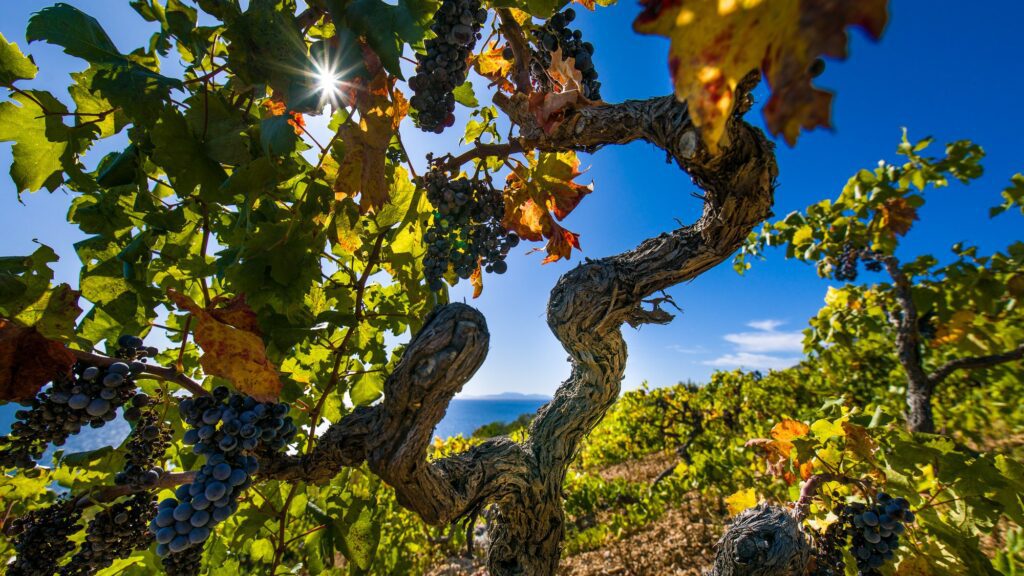
Hvar’s wine history stretches over 2,400 years, beginning with Ancient Greeks (384 BC) who introduced vines to the fertile Stari Grad Plain, making it one of the world’s oldest wine regions, with evidence found in coins and artifacts. Romans expanded cultivation, followed by Slavs and Byzantines, maintaining wine as a vital part of the island’s economy through medieval times. Despite challenges like phylloxera and Venetian influence shifting focus to fishing, Hvar’s winemaking tradition, using unique local grapes like Bogdanuša and Plavac Mali, endures, blending ancient methods with modern techniques.
Key Historical Eras of Wine Making on Hvar Island
- Ancient Greek Foundations (384 BC): Settlers from the island of Paros founded the colony of Pharos (modern-day Stari Grad) and brought the first organized viticulture to the island. They laid out the Stari Grad Plain using a geometric system of stone walls that is still in use today.
- Roman & Medieval Continuity: Romans improved production techniques and built villae rusticae in the vineyards. Following the fall of Rome, incoming Croats (8th–9th century) continued these traditions, often appointing “royal wine procurers” to oversee the industry.
- The 19th Century “Golden Age”: Hvar’s wine production peaked in the late 1800s. While French and Italian vineyards were being decimated by phylloxera, Hvar’s exports surged to meet European demand, with vineyards covering over 5,700 hectares (nearly 20% of the island).
- The 20th Century Crisis: A combination of the “Wine Clause” (which allowed cheap Italian imports into Austria-Hungary) and the eventual arrival of phylloxera in 1909 caused a total collapse of the local economy, leading to mass emigration.
Modern Viticulture (2025 Status)
Today, Hvar focuses on high-quality, boutique production rather than volume. Cultivated areas have stabilized at approximately 300 hectares.
- Indigenous Grapes: The island is a stronghold for native varieties like Plavac Mali (red), Bogdanuša (white, “given by God”), and Prč (white, once popular in the Viennese court).
- Sustainable Trends: Today most of the producers, have returned to organic farming and traditional “natural” or orange wine methods.