
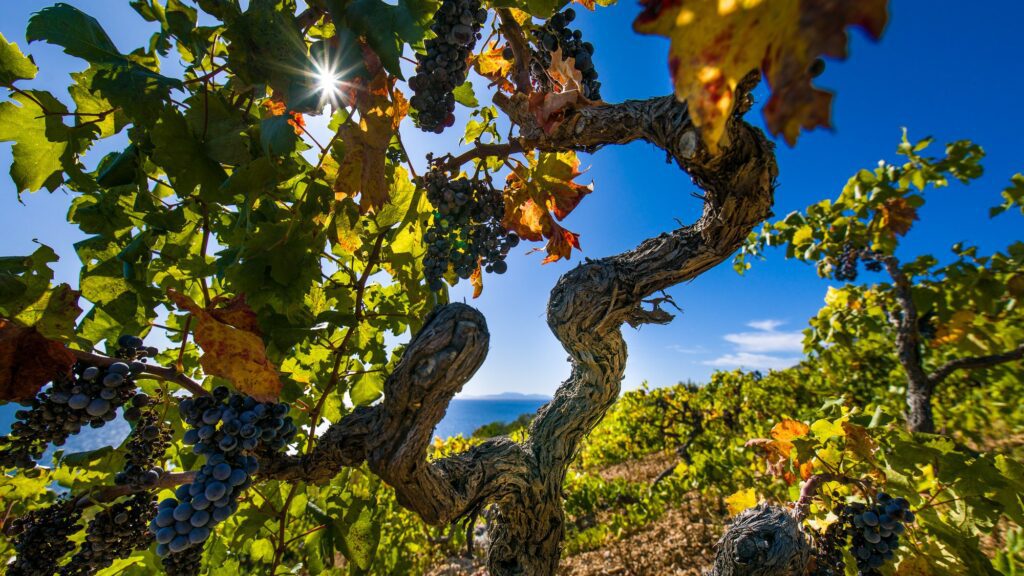
In the beginning there was an island, the island was the heaven, but it lacked something…
Wine.
…because no place can truly be heaven without wine.
And that heavenly liquid has been shaping Hvar for more than two thousand years ago. Long before the island became famous for its beaches, villas, and luxury yachts, its hillsides and fertile fields were already covered with vineyards. Today, when visitors enjoy a glass of Hvar wine during a wine tasting experience, they are sipping on more than 2400 years of tradition. The same as a drop of wine changes a glass of water into “bevanda” (traditional local drink), a drop of wine from Hvar might change you forever. It may make you cherish each glass even more because you’ll know that blistered hands of our ancestors brought it to you through time…
And it wasn’t always easy…
To be fair, for most of history, it was kind of difficult.
But we did it. And we will keep doing it…
Why Is Hvar Island so Good for Winemaking?
The story of Hvar wine begins with the island’s unique geography. Long sunny days, dry summers, and rocky soil create ideal conditions for grape cultivation. Combined with centuries of agricultural knowledge passed down through generations, these natural advantages helped transform Hvar into one of the most important wine-producing areas of the Adriatic.
The history of wine on Hvar Island is not only about agriculture. It reflects the rise and fall of civilizations that ruled the island – from Greek colonists and Roman merchants to Venetian traders and modern Croatian winemakers. Each era left its mark on the vineyards, production techniques, and wine culture that still defines the island today.
And while there are no specific writings for Hvar for each era, each civilization left more general writing about their wine making methods, so we’ll use those to paint a fuller picture of the development of wine on Hvar, from Illyryans to Croatian people.
Wine Before the Greeks: Early Mediterranean Roots
Geography and Climate for Vineyards on Hvar Island
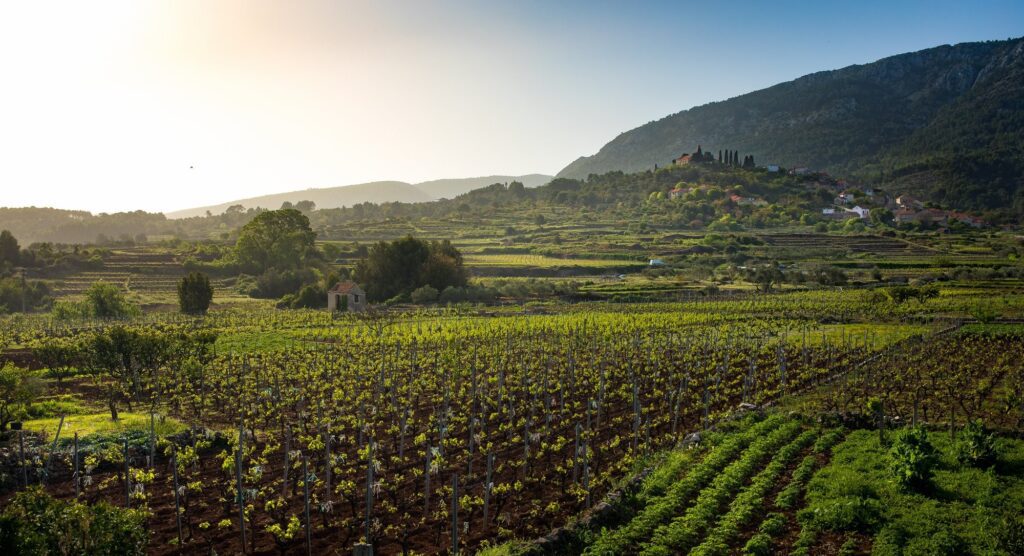
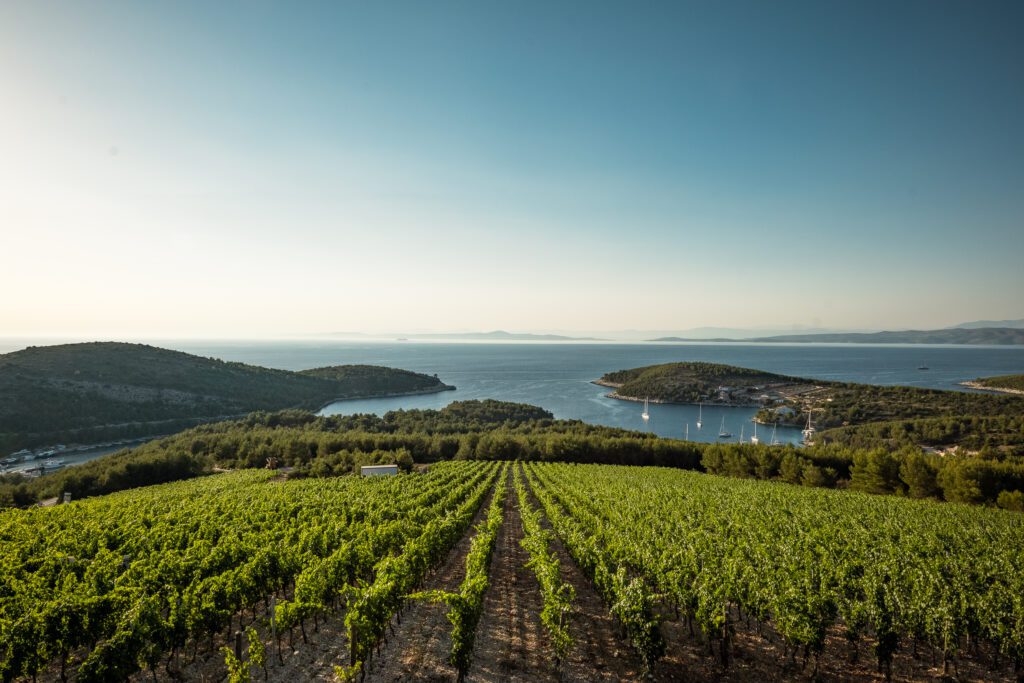
Even before organized viticulture appeared, Hvar’s landscape naturally favored grape cultivation. The island enjoys more than 2,700 hours of sunshine per year, making it one of the sunniest places in Europe. Its dry climate, limestone soil, and steep slopes create conditions that are ideal for vineyards.
Fun fact: there’s even a Plavac Mali label named “2718 sati sunca u boci” (2718 sunny hours in a bottle) made by Duboković, the winery you can visit during our Wine and Olive Oil Tasting Tour. And that tour also sparked a very romantic story between one of our guest and wine tour host.
These characteristics are still visible today. Many vineyards on Hvar grow on terraced hillsides overlooking the sea, where the combination of sun reflection from the water and rocky soil produces grapes rich in flavor and complexity. These natural conditions are one of the main reasons the island has remained a center of wine production for centuries.
Early Cultivation and Local Traditions
While there is limited archaeological evidence of organized wine production before the arrival of the Greeks, historians believe that the local Illyrian population already cultivated vines and produced simple forms of wine. Throughout the Mediterranean, grape cultivation was closely linked to daily life, and it is likely that the inhabitants of Hvar followed similar practices.
These early traditions laid the foundation for what would later become a sophisticated wine culture. When Greek settlers eventually arrived, they found a landscape perfectly suited for vineyards.
Wine Culture in Daily Life on Hvar Island
Wine in ancient Mediterranean societies was never just a drink. It was an important part of social gatherings, religious rituals, and daily meals. This cultural relationship with wine would remain constant throughout the island’s history and continues today through wine tasting experiences and vineyard visits.
The Greek Era: The Birth of Organized Vineyards
Establishment of Pharos
The true beginning of organized wine production on Hvar dates back to 384 BC, when Greek settlers from the island of Paros founded the colony of Pharos in what is today Stari Grad. Along with their language and architecture, the Greeks brought advanced agricultural knowledge, including systematic vine cultivation.
One of their most remarkable achievements was the division of the fertile plain behind Stari Grad into rectangular plots of land. This area, known today as the Stari Grad Plain, is still preserved in almost the same form and has been recognized as a UNESCO World Heritage Site. The grid system created by the Greeks allowed vineyards and olive groves to be organized efficiently, ensuring consistent agricultural production.
Greek Vineyard Planning on Hvar Island
The Greek settlers applied careful planning to their vineyards. The rectangular plots ensured equal distribution of land and facilitated irrigation and cultivation. Stone walls were built to mark the boundaries of fields, many of which remain visible today.
This organized approach to agriculture marked the first structured phase in the history of wine on Hvar. The system was so effective that many of the same field divisions are still used by modern farmers.
Hvar Wine Trade and Economy during Greek Period
Wine quickly became an important economic resource for the Greek colony. Amphorae filled with wine were traded across the Adriatic and the wider Mediterranean. The sheltered bays of Hvar provided ideal harbors for ships transporting wine and other goods.
Useful Hvar tip: If you want to see amphores, the Museum of Stari Grad has a nice collection and it’s close to Petar Hektorović’s Summer House which is one of the highlights of Stari Grad.
The Roman Era: Expansion of Wine Production
Roman Viticulture Techniques
Under Roman rule, viticulture across the Adriatic became more systematic and better documented. Roman agricultural writers such as Cato, Columella, and Pliny the Elder described detailed vineyard management techniques that influenced wine production throughout the empire, including the eastern Adriatic islands and Hvar.
One important development was the refinement of pruning practices. Roman agronomists emphasized controlling vine growth to regulate grape yield and improve quality. Instead of allowing vines to grow freely, they recommended regular pruning and careful training of the plant so that sunlight and airflow could reach the grapes more evenly. These methods helped produce more consistent harvests and better-quality wine.
Romans also used several different vine training systems. In many Mediterranean vineyards, vines were grown low to the ground as bush vines, which protected them from wind and drought. In other cases, vines were trained to grow along wooden stakes or even climb trees in a method known as arbustum, where vines were supported by living trees such as elm. This allowed farmers to cultivate other crops beneath the vines and maximize the use of agricultural land.
Wine production technology also became more advanced. Roman wineries used large wooden beam presses to extract juice from grapes more efficiently than earlier manual pressing methods. After pressing, the grape juice fermented in large clay containers known as dolia. These enormous vessels were often partially buried in the ground, which helped stabilize temperature during fermentation and storage. A single dolium could hold hundreds or even thousands of liters of wine, allowing production on a much larger scale.
Roman winemakers also practiced several techniques to stabilize and modify wine. One common method involved boiling grape must to create thick syrups known as defrutum or sapa, which were sometimes added back into wine to increase sweetness, improve preservation, or adjust flavor. These practices are described in Roman agricultural texts and were widely used throughout the empire, including Hvar Island.
Hvar Wine in Roman Society
Wine was central to Roman culture. It was consumed daily by people from all social classes and played an important role in celebrations and rituals. Roman villas and agricultural estates on the island often included facilities for pressing grapes and storing wine.
Because of this demand, vineyard areas expanded, and wine production became one of the island’s key economic activities.
Trade of Hvar Wine Across the Adriatic During Roman Period
Roman merchants transported wine across the Adriatic Sea to markets in Italy and other parts of the empire. The island’s strategic location made it a natural stop for ships moving between Mediterranean ports.
Wine from Hvar was therefore not only consumed locally but also traded widely throughout the region.
Medieval and Venetian Period: Wine as a Strategic Resource
Monastic Vineyards on Hvar Island
After the fall of the Western Roman Empire, many agricultural systems across the Mediterranean declined, but vineyards on the eastern Adriatic survived largely thanks to monasteries and church estates. Religious institutions played a key role in maintaining viticulture because wine was essential for the Eucharist and therefore had to be produced regularly and reliably.
Monasteries often owned some of the best agricultural land and maintained vineyards close to their buildings or on fertile plains such as those around Stari Grad and Jelsa. Monks preserved agricultural knowledge by continuing practices inherited from earlier periods while adapting them to local conditions. Written records from Dalmatian monasteries show that vineyards were carefully maintained and that wine production followed a structured seasonal cycle – winter pruning, spring vineyard maintenance, summer canopy management, and autumn harvest.
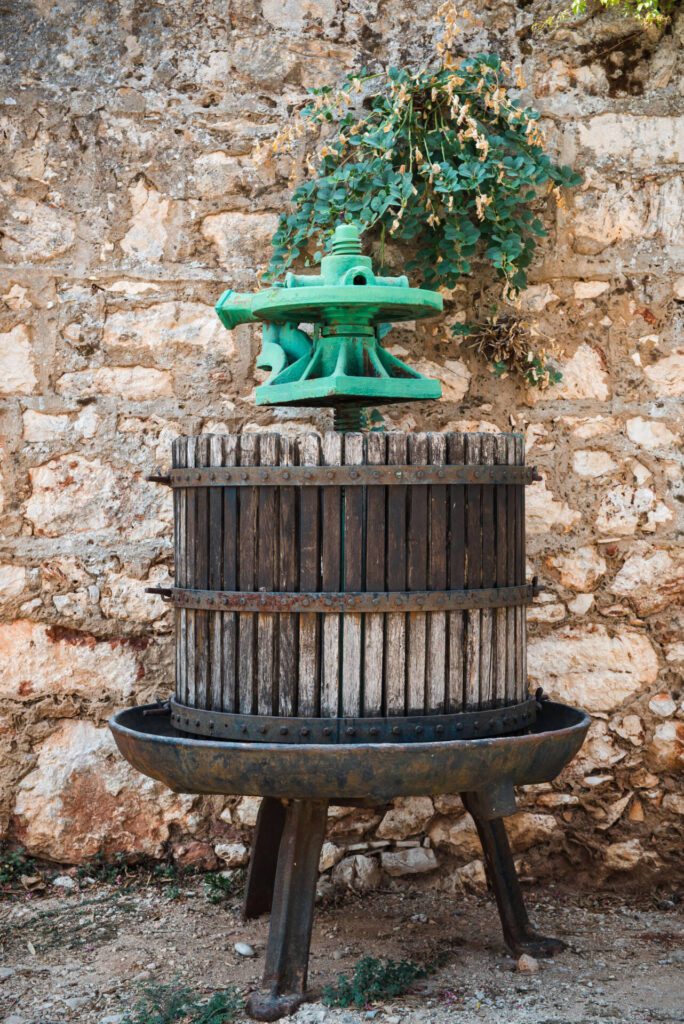
Production during the medieval period was usually small-scale. Grapes were harvested by hand and pressed using relatively simple wooden presses or by treading grapes in stone basins. Fermentation typically took place in wooden barrels or clay vessels. The wines produced during this time were often consumed relatively young, as long-term storage was more difficult without advanced sealing techniques.
Monastic vineyards therefore served two purposes. They ensured a stable supply of wine for religious use, but they also preserved the knowledge and techniques necessary for viticulture to continue through centuries of political and economic change.
Useful Hvar tip: Stari Grad monastery still has a vineyard. It’s Cabernet Suvignon and a local wine maker tends it. The result is “Poeta”, a label honoring Petar Hektorović, the symbol of Stari Grad. OPG Pina makes less than 200 bottles of “Poeta” and you can find them in the center of the town.
Venetian Influence on Trade of Hvar Wine
A major transformation occurred when the island came under the rule of the Venetian Republic in the 15th century. Venice was one of the most powerful maritime trading states in Europe, and its economy depended heavily on shipping networks that connected the Adriatic with markets throughout the Mediterranean.
Under Venetian administration, Dalmatian islands – including Hvar – became important agricultural suppliers for the republic. Wine, olive oil, fish, and other goods were regularly transported to Venetian markets. Because vineyards were already well established and the climate was ideal for grape cultivation, wine became one of the most valuable export products of the island.
Venetian rule also helped standardize trade and production. The republic regulated agricultural production, taxation, and shipping routes. Ports on Hvar became important stopping points for merchant vessels traveling along the eastern Adriatic coast. Wine could easily be transported from inland vineyards to coastal towns and then shipped to larger markets such as Venice.
The geography of Hvar played an important role in this development. The island sits along natural maritime routes connecting southern and northern Adriatic ports. Its sheltered harbors allowed ships to load agricultural products safely before continuing toward Italy or other Mediterranean destinations.
Changes in Winemaking Practices on Hvar Island
During the medieval and Venetian periods, winemaking practices became more closely tied to local traditions and environmental conditions. Vineyards were usually planted on terraced slopes or within fertile plains surrounded by dry stone walls. These terraces helped prevent soil erosion and allowed farmers to cultivate grapes on steep terrain.
Compared with earlier large-scale Roman production systems, medieval winemaking on Hvar tended to focus more on smaller family vineyards. Grapes were typically processed shortly after harvest in local cellars, often using stone basins or wooden presses. Fermentation occurred in wooden barrels, which gradually replaced many of the earlier clay vessels used in antiquity.
The wines themselves were generally robust and intended for everyday consumption rather than long aging. Because maritime trade routes allowed wine to be transported relatively quickly, producers could sell young wine to nearby markets without requiring extended storage.
Hvar Wine in Everyday Dalmatian Life
By this period, wine had become deeply integrated into everyday life across Dalmatia. Almost every household maintained at least a small vineyard or participated in grape cultivation in some way. Wine was consumed daily, often diluted with water – a drink still common in Dalmatia, we call it “bevanda”, and served as a safer alternative to untreated drinking water.
It was also an important source of calories and a staple component of Mediterranean diets. Agricultural families relied on vineyards not only for wine but also as a stable economic resource. Surplus wine could be traded locally or exported through the island’s ports.
This strong connection between agriculture, daily life, and trade helped establish wine as one of the most important economic products of the island. The system of small family vineyards that developed during this period has remained a defining feature of Hvar’s wine culture.
Even today, many of the island’s vineyards are still owned by families whose winemaking traditions stretch back generations. Our wine tour takes you to meet people from Hvar whose family tree is so connected to winemaking that they should call it their family vine.
19th Century Boom and the Phylloxera Crisis
The Cause of Expansion of Vineyards on Hvar Island
The 19th century marked one of the most prosperous periods in the history of wine on Hvar. Several economic and political factors combined to create an extraordinary demand for Dalmatian wine, and vineyards expanded rapidly across the island.
A key reason for this boom was the phylloxera crisis that first struck France in the 1860s. As vineyards across Western Europe were devastated by the pest, wine production in major wine regions collapsed. This sudden shortage created a massive demand for wine from other parts of the Mediterranean, including Dalmatia.
Hvar, with its long tradition of viticulture and favorable climate, was well positioned to respond. Vineyard areas expanded significantly as farmers converted hillsides, terraces, and fertile plains into grape-growing land. Dry stone terraces were extended into previously uncultivated areas, and wine production became the island’s dominant agricultural activity.
By the late 19th century, a large portion of the island’s population depended directly on vineyards for their livelihood. Grapes were harvested in large quantities, and wine was exported through Dalmatian ports to markets across the Austro-Hungarian Empire and beyond. In many coastal communities, the economy revolved almost entirely around wine production and trade.
Why Dalmatian Wine, Including Wine from Hvar, Became So Sought After?
Several characteristics made wine from Hvar and other Dalmatian islands particularly attractive to European buyers during this period.
First, the Mediterranean climate produced grapes with high sugar content, resulting in wines that were naturally stronger and richer than many northern European wines. These wines were often used not only for direct consumption but also for blending, strengthening lighter wines produced in cooler regions.
Second, Dalmatia’s position within the Austro-Hungarian Empire made trade relatively accessible. Wine could be transported by ship along the Adriatic coast and distributed to inland markets throughout Central Europe.
Finally, Dalmatian wines were known for their durability during transport. Because of their strength (high alcohol percentage) and structure (full body, high tannins), they were less likely to spoil during long maritime journeys, making them attractive to merchants involved in large-scale wine trade.
As a result, Hvar wine became a valuable commodity in regional markets, and vineyard expansion continued for several decades.
How The Phylloxera Disaster Affected Hvar Island?
Despite this prosperity, the same pest that had devastated Western Europe eventually reached Dalmatia. Phylloxera, a tiny insect that attacks grapevine roots, spread through European vineyards in the late 19th century.
When it reached the eastern Adriatic, the consequences were severe. Vineyards across Dalmatia were gradually destroyed as infected vines died. Because most vineyards were planted with European grape varieties that had no resistance to the pest, entire harvests were lost.
For an island economy that depended heavily on wine production, the impact was devastating. Vineyard areas shrank dramatically, and many families lost their primary source of income.
How The Austro-Hungarian Trade Shift Affected Hvar Wine?
The crisis was made even worse by a political and economic change within the Austro-Hungarian Empire. In the late 19th century, trade policies began to shift, and the empire increasingly imported cheaper wine from Italy.
Italian producers were able to supply large quantities of inexpensive wine, often at prices lower than those produced in Dalmatia. This made it difficult for Dalmatian wine growers to compete, especially at a time when their vineyards were already struggling with phylloxera.
The combination of vineyard destruction and changing trade policies severely weakened the Dalmatian wine economy. What had been one of the most important agricultural sectors of the region began to decline rapidly.
Were there Migration and Economic Change on Hvar because of Phylloxera?
As vineyards disappeared and wine production collapsed, many island residents were forced to seek new opportunities elsewhere. Large waves of migration began during the late 19th and early 20th centuries.
Many inhabitants of Hvar emigrated to the United States, South America, Australia, and New Zealand, joining broader migration movements from the Dalmatian coast. Families left the island in search of work, and entire communities were reshaped by this demographic shift.
Although some vineyards were eventually replanted – often using American rootstocks resistant to phylloxera – the scale of wine production never returned to the same level as during the 19th-century boom.
Winemaking on Hvar During the Socialist Yugoslavia Period
After the Second World War, Hvar became part of socialist Yugoslavia. Agricultural production across the country underwent significant restructuring, including changes in the organization of vineyards and wine production.
During this period, winemaking shifted toward cooperative systems and larger agricultural organizations. Many small private vineyards continued to exist, but grape growers often sold their harvests to local cooperatives rather than producing wine independently. These cooperatives collected grapes from numerous farmers and processed them in centralized wineries.
The focus of wine production during socialism was largely quantity rather than prestige or branding. Wines were produced in large volumes and distributed through domestic markets across Yugoslavia. While high-quality wines still existed, the emphasis was on supplying stable quantities of affordable Hvar wine rather than developing internationally recognized wine labels.
At the same time, vineyards remained an important part of the island’s rural life. Many families continued cultivating grapes on traditional terraces and small plots inherited from earlier generations. Even when grapes were sold to cooperatives, knowledge of viticulture and winemaking remained deeply rooted in local communities.
Toward the late 20th century, as economic reforms and the eventual dissolution of Yugoslavia opened new market opportunities, a new generation of winemakers began focusing again on quality, indigenous grape varieties, and boutique production. This shift would eventually lead to the modern revival of Hvar wine and the development of wine tourism on the island.
Modern Hvar Wine: From Tradition to Wine Tourism
Revival of Croatian and Hvar Grape Varieties
In the modern era, winemakers on Hvar began focusing on quality rather than quantity. Indigenous grape varieties such as Plavac Mali, Bogdanuša, and Pošip (indigenous to Korčula Island) became the foundation of the Hvar’s wine identity, with other indigenous grapes such as Drnekuša and Prč getting more and more attention every year. Sadly, the 6th indigenous grape from Hvar, Mekuja, is not as popular as it used to be, but some families still have Mekuja grapes and make their house wine from it, usually blending it with Bogdanuša or Pošip.
These varieties produce wines that reflect the island’s climate and terroir and the biggest comeback story is surely Prč, an indigenous white from Sućuraj that was saved from extinction by Vjeko Vujnović whose Vujnović Winery is still the biggest global producer of Prč (and a good reason to visit Sućuraj. And trust us, you need a good reason to visit Sućuraj…).
Boutique Wineries and Family Producers on Hvar Island
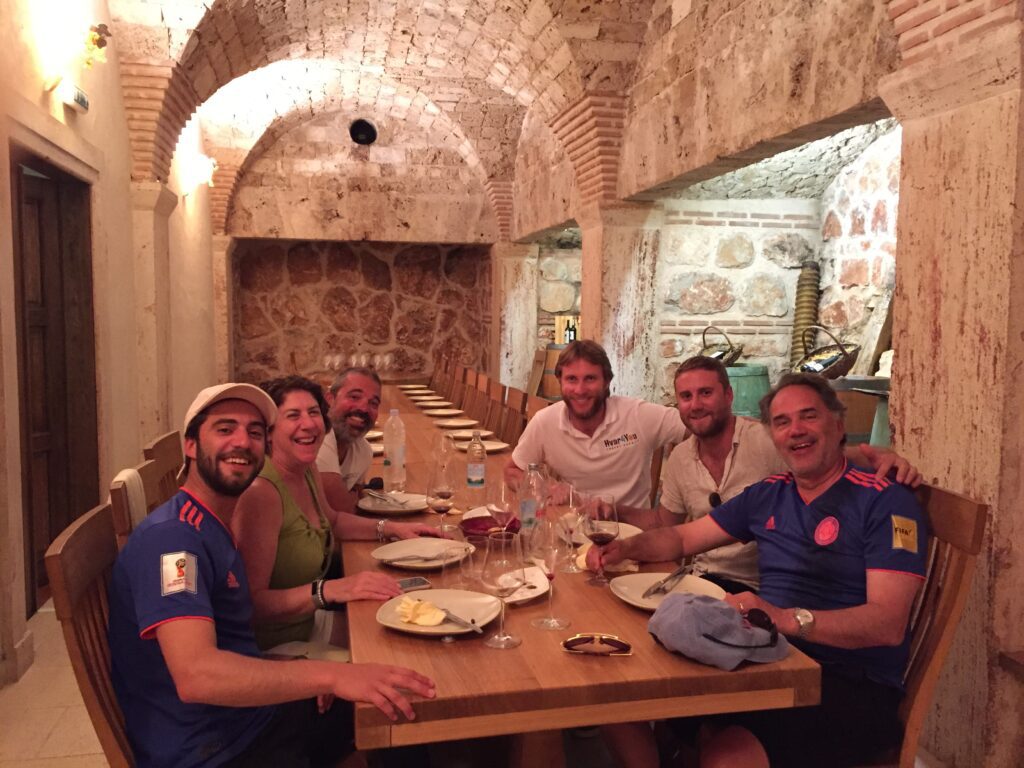
Today, many wineries on Hvar are small family operations that combine traditional knowledge with modern production techniques. Visitors can often meet the winemakers themselves, walk through vineyards, and learn about the island’s wine heritage directly from the people who continue the tradition.
Wine Tourism on Hvar
Wine tourism has become an important part of the island’s economy. Travelers interested in authentic local experiences often join Hvar wine tours and participate in guided wine tasting experiences.
These tours allow visitors to discover both the history and the flavors of Hvar wine while exploring some of the island’s most beautiful landscapes. And each tour is made so the biggest wine rookies and Masters of Wine can enjoy them.
In the Beginning There Was Wine…
Now you know that the history of wine on Hvar is a very long story of resilience and continuity. From ancient Illryans to modern boutique wineries, each generation has contributed to shaping the island’s wine culture.
Today, when visitors taste wine on Hvar, they are connecting with a tradition that has survived for more than two millennia… Through empires, through crises, wars and regime shifts – wine was Hvar, and Hvar was wine.
So when you cheer with a glass of Hvar wine, you don’t celebrate just that moment and those you share it with… You honor each pair of hands, from Illiryan to Croatian, that brought wine through time to your soul.
Here is another treat for you, an origin story of another vital liquid on Hvar, enjoy discovering the history of Hvar olive oil (did you know that Romans made 4 types of olive oil?)
Or if you’re in the mood for something fun, romantic and worthy of a Netflix show read – Hvar Wine Tour Sparked a Love Story – How Wine Brought Manhattan and Hvar Together.
Or if you’re more of those who prefer to live their stories – Book your Hvar wine and olive oil tour.